
EVENT RECAP
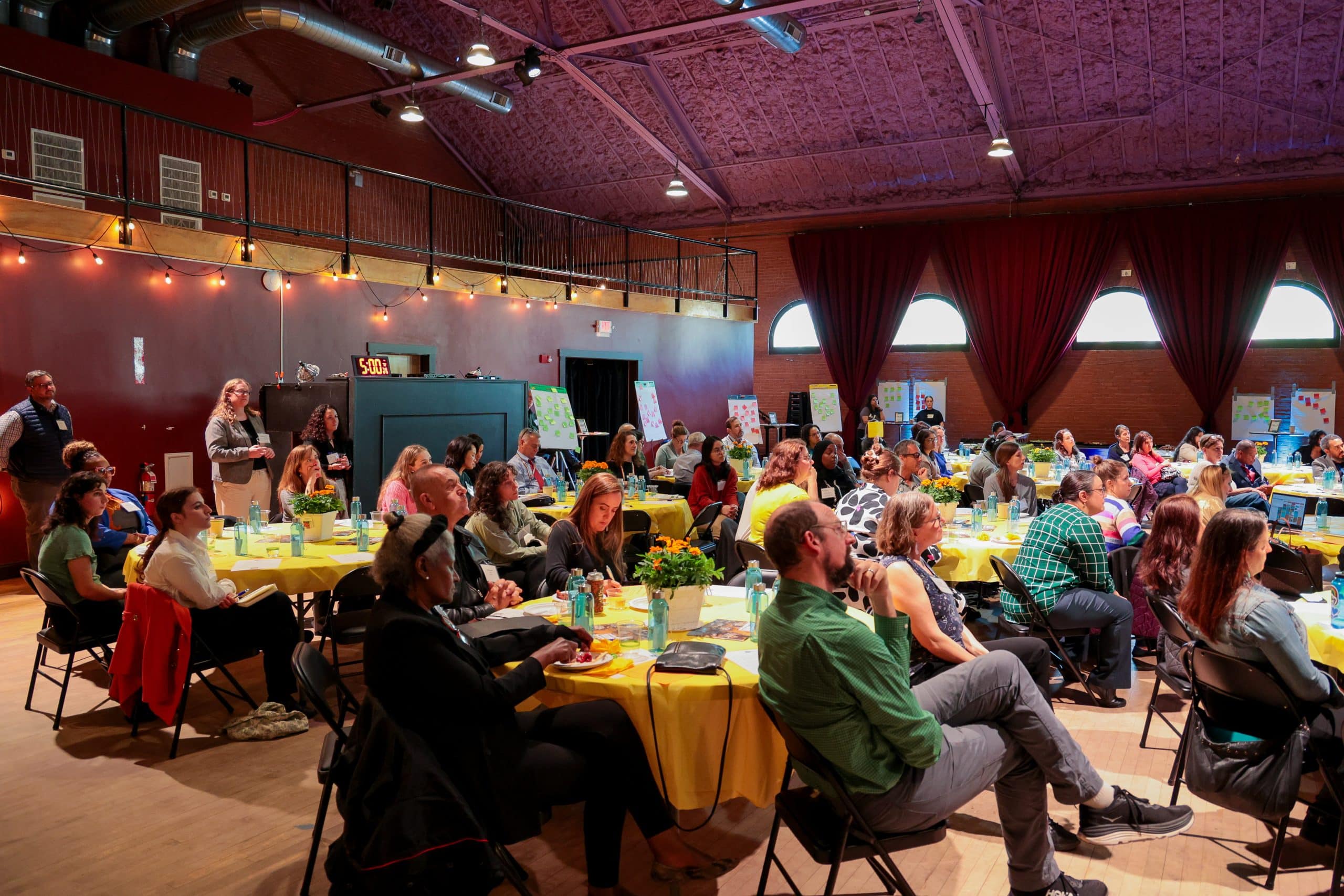
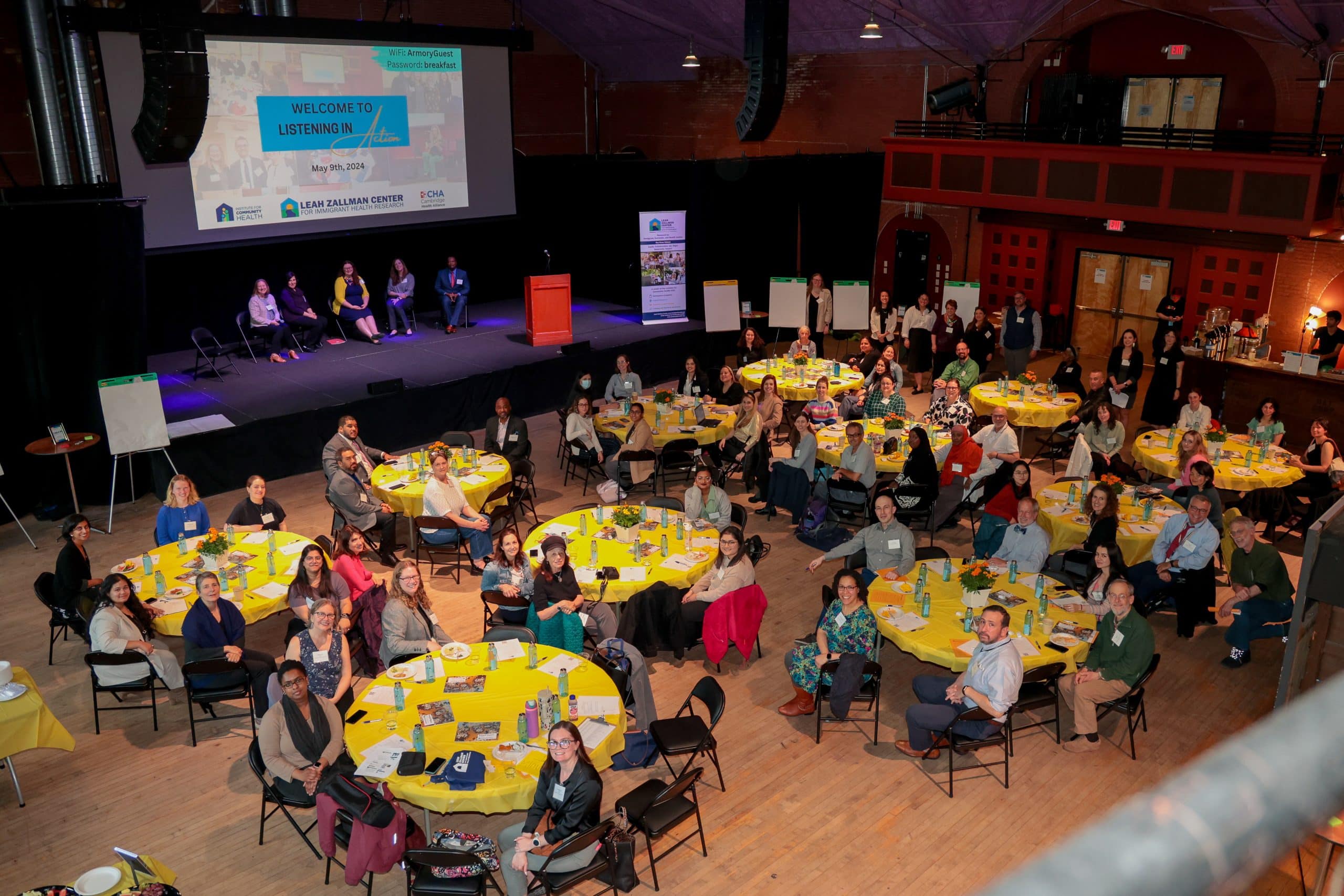
On May 9, 2024, the Leah Zallman Center for Immigrant Health Research (LZC) held our annual spring learning event, Listening in Action (flip through the slides below for an overview of the event agenda).
We were thrilled with the vibrant cross-sector space full of pro-immigrant researchers, clinicians, advocates, policymakers, and non-profit and philanthropic leaders. The work everyone does every day in their various spheres of influence is vital to immigrant well-being. Our event showed that by joining forces, we have the potential to address structural determinants such as power, policies, and narratives on an even larger scale.
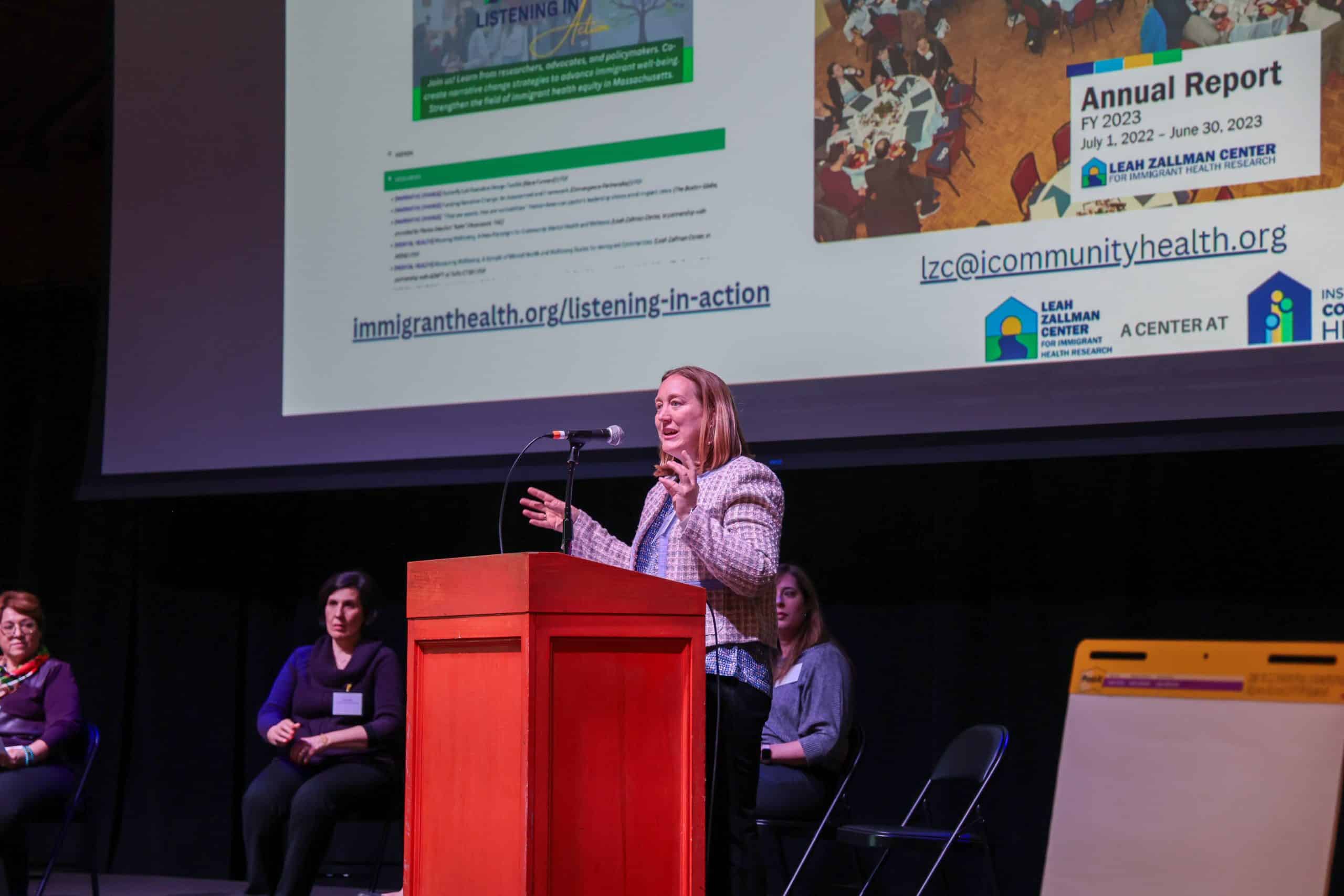
Dr. Jessica Santos, LZC director, provided opening remarks and emceed the event.
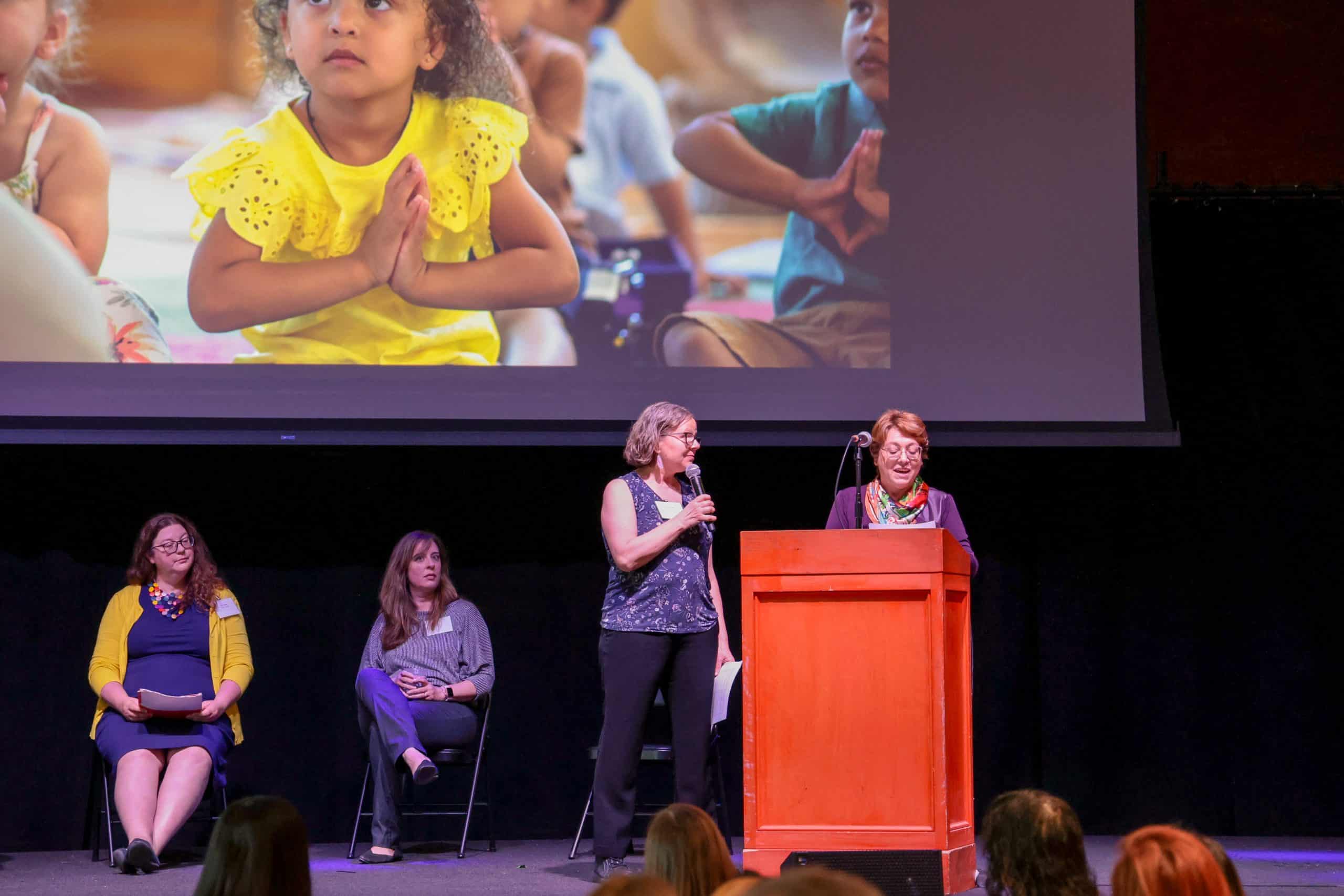
María Hart, EHR Boston Communities executive director, facilitated a meditation activity in Spanish. Dr. Carrie Fisher, ICH research and evaluation scientist, provided English interpretation.
Pastor Keke of True Alliance Center offered a high-level overview of Haitian immigrants’ reasons for seeking refuge in the United States and their current experiences, noting that many have work permits and want to work, but cannot find jobs. Luisa Raleza, a long-time ICH employee, shared a beautiful tribute to Dr. Leah Zallman, reminiscing about Leah’s kindness, empathy, and belief in immigrants’ dignity, contributions, and humanity. Liz Sweet, MIRA executive director, then introduced MIRA’s recently launched narrative change campaign, Massachusetts Welcomes, and highlighted some emerging findings from the coalition’s message testing work.
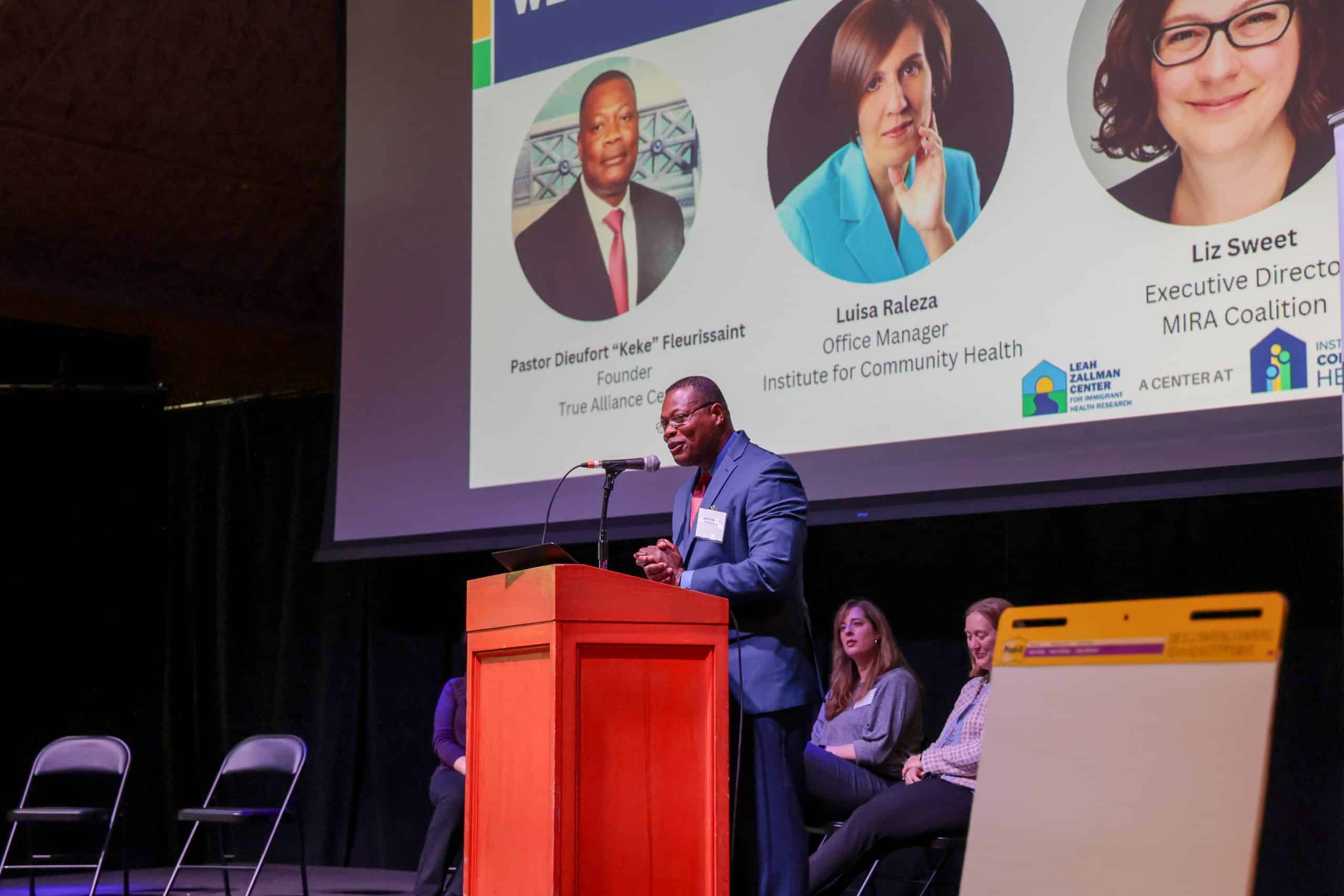
Pastor Keke, founder of True Alliance Center and prominent Haitian activist, described the current immigration landscape in Massachusetts.
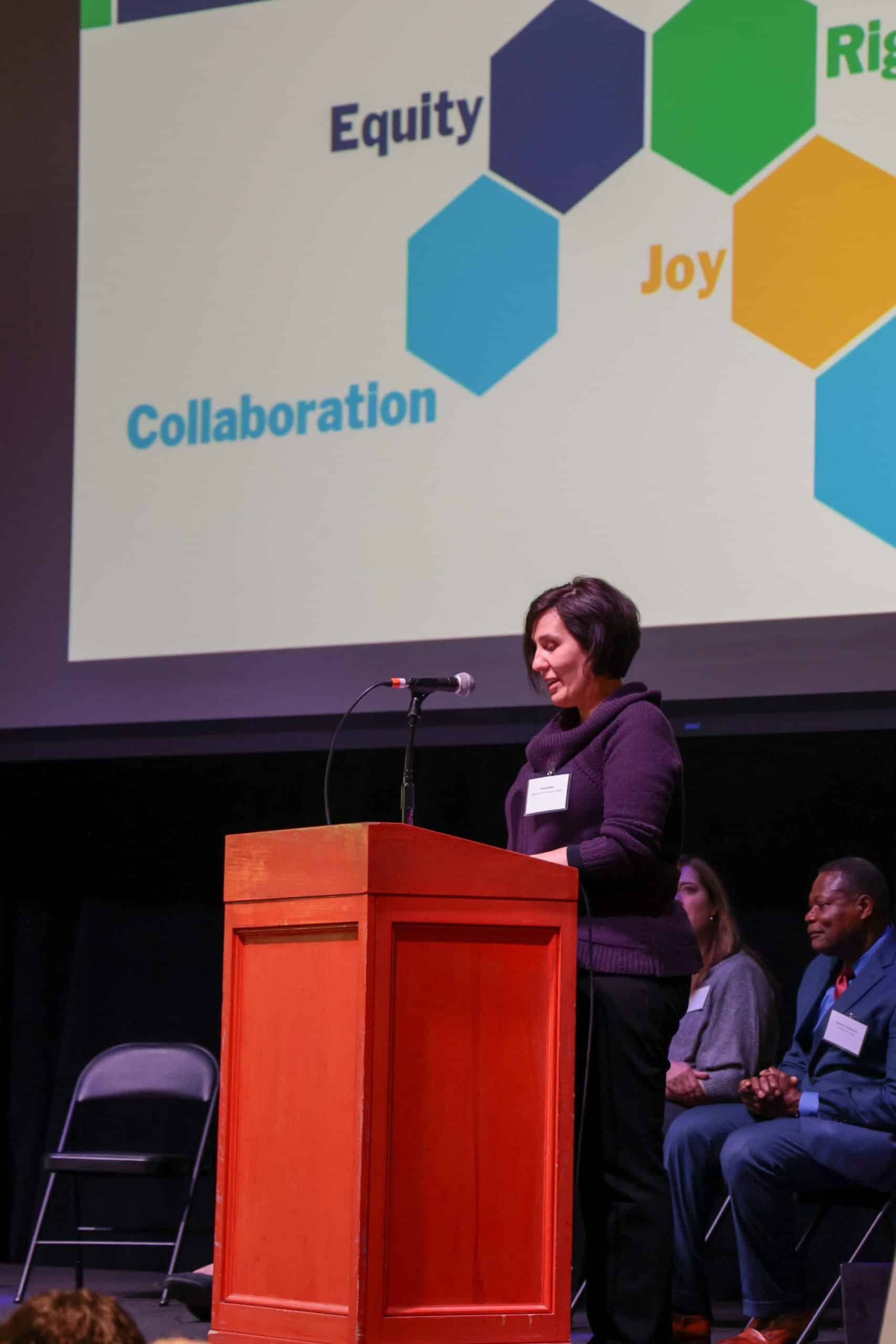
Luisa Raleza, ICH office manager, noted Leah Zallman’s profound impact on her and the field.
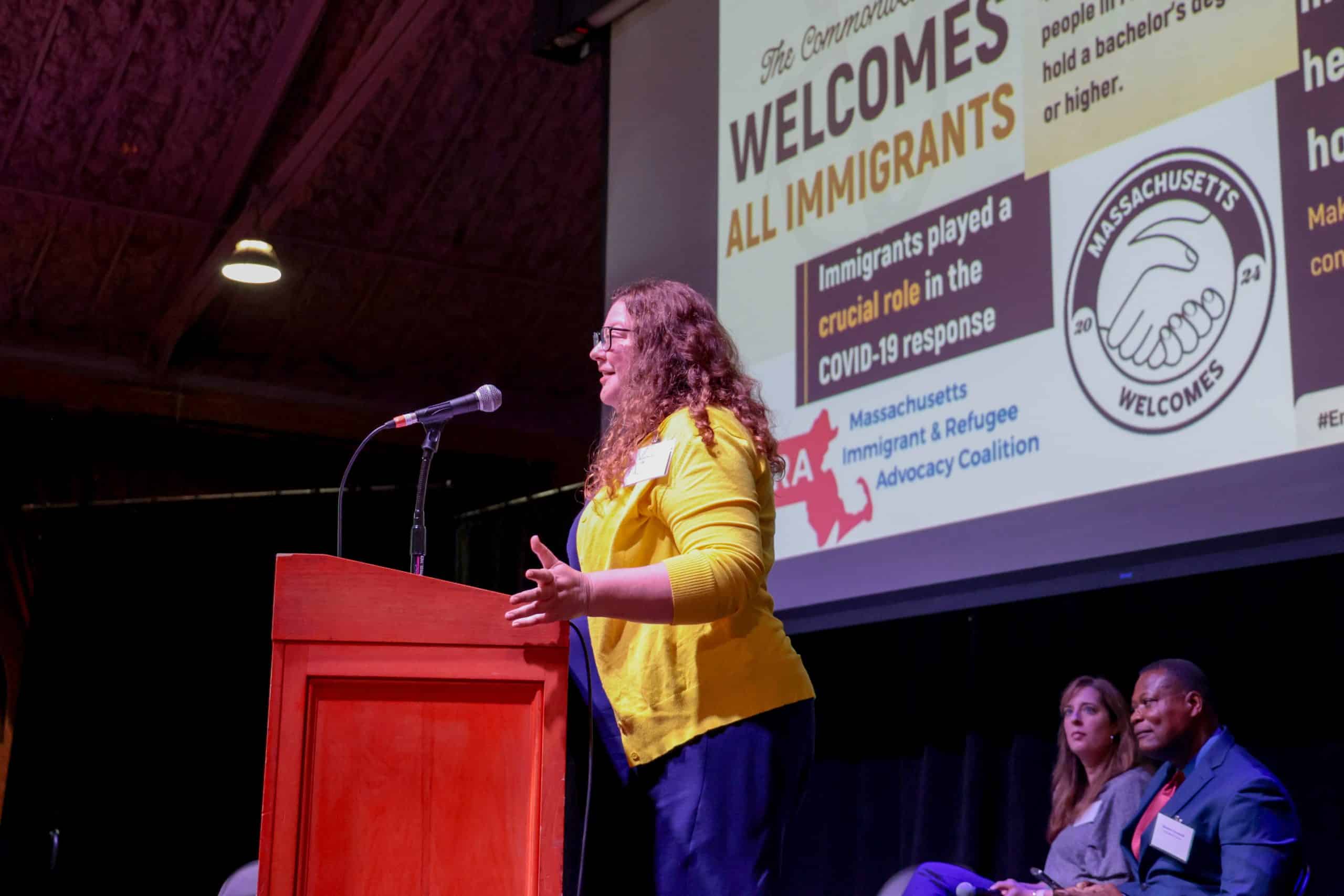
Liz Sweet, MIRA executive director, highlighted that people hold more positive connotations around the word “immigrant” rather than “migrant.”
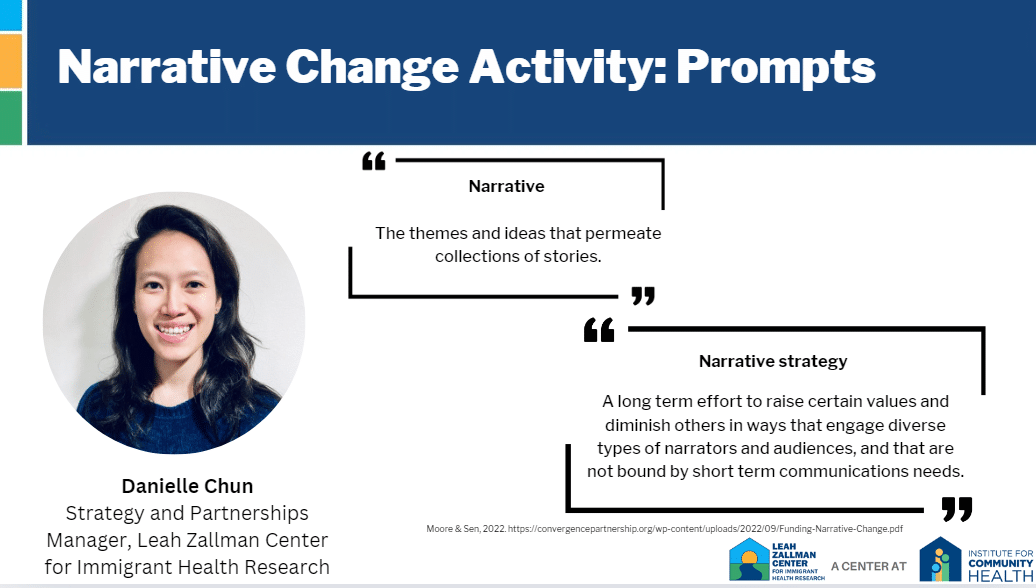
Danielle Chun, LZC strategy and partnerships manager, introduced the narrative change activity, inviting attendees to reflect on negative narratives about immigrants that they have heard and uplift positive narratives about immigrants that we want to see in Massachusetts. Together, we interrogated harmful, incorrect, and assimilationist/racist narratives and identified core values to center immigrant well-being in nine different immigrant health topics. Check out the Narrative Change Activity section below for a synthesis.Cristina Aguilera, executive director of the Massachusetts Office for Refugees and Immigrants, spoke about the role and efforts of the state to care for and welcome newly arrived immigrants. Vetto Casado, Shifting Power and Advancing Justice director at The Boston Foundation, described how watching his mother and her friends welcome and support other immigrants left an indelible impact on his life. Sofía Ladner, LZC staff and community engagement manager, provided closing remarks, thanking the vendors and contractors who provided food and technology support–Capetivate, Ebi Sushi, Dave’s Fresh Pasta, and ZaZ Restaurant.
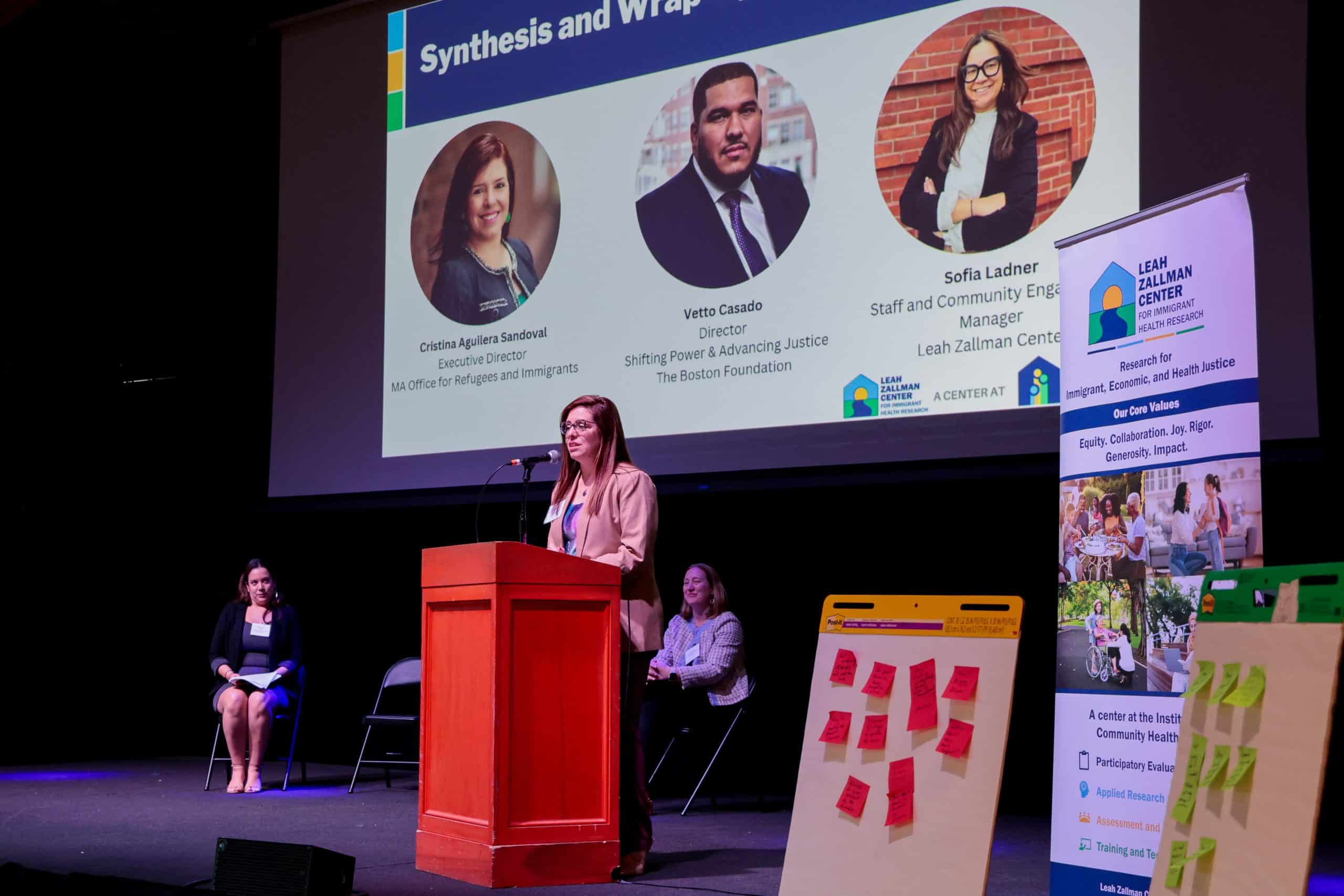
Cristina Aguilera, executive director of the Massachusetts Office for Refugees and Immigrants (ORI), articulated ORI’s efforts to create a welcoming environment for immigrants in Massachusetts.
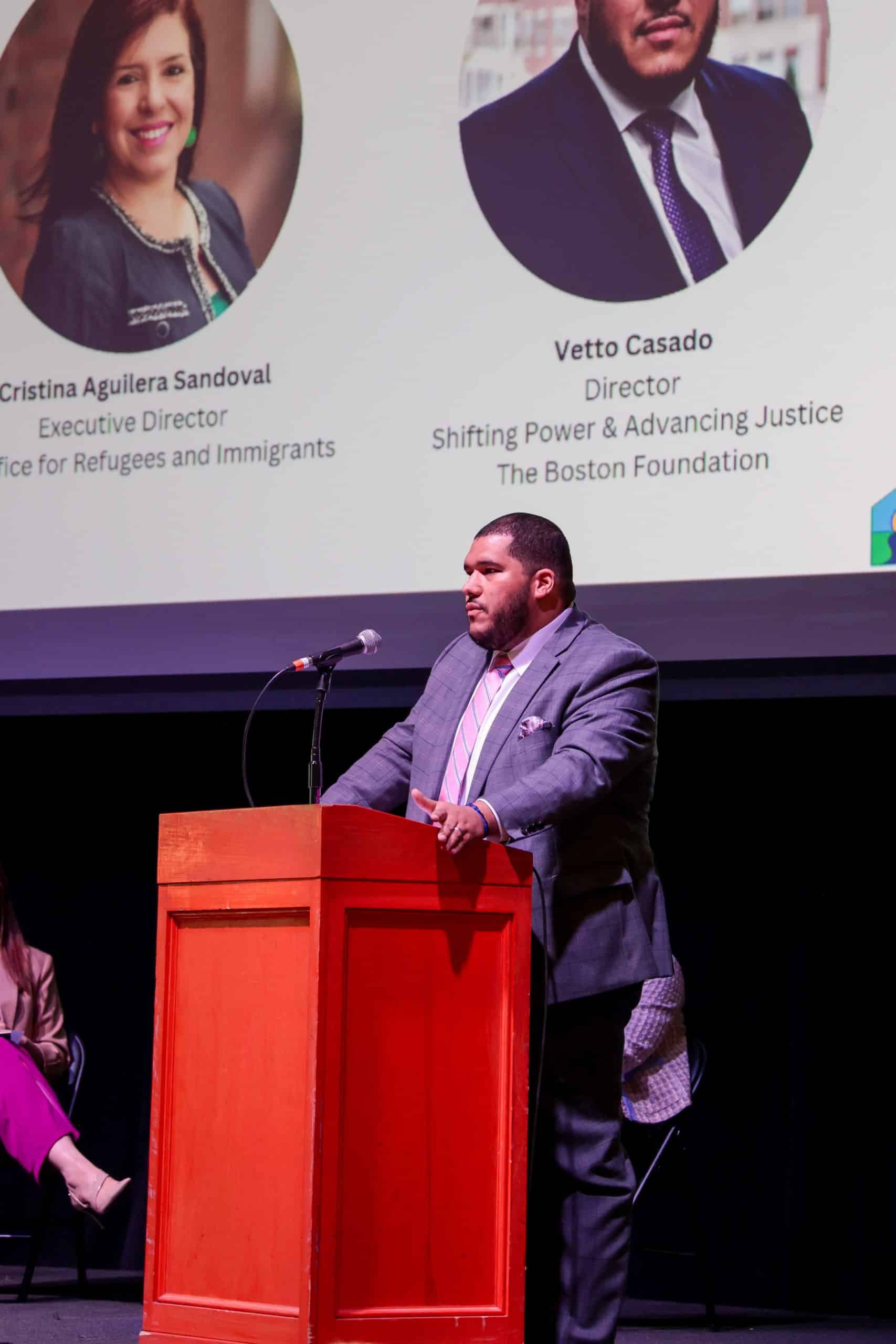
Vetto Casado, The Boston Foundation’s Shifting Power and Advancing Justice director, highlighted the role immigrants play in welcoming and supporting one another.
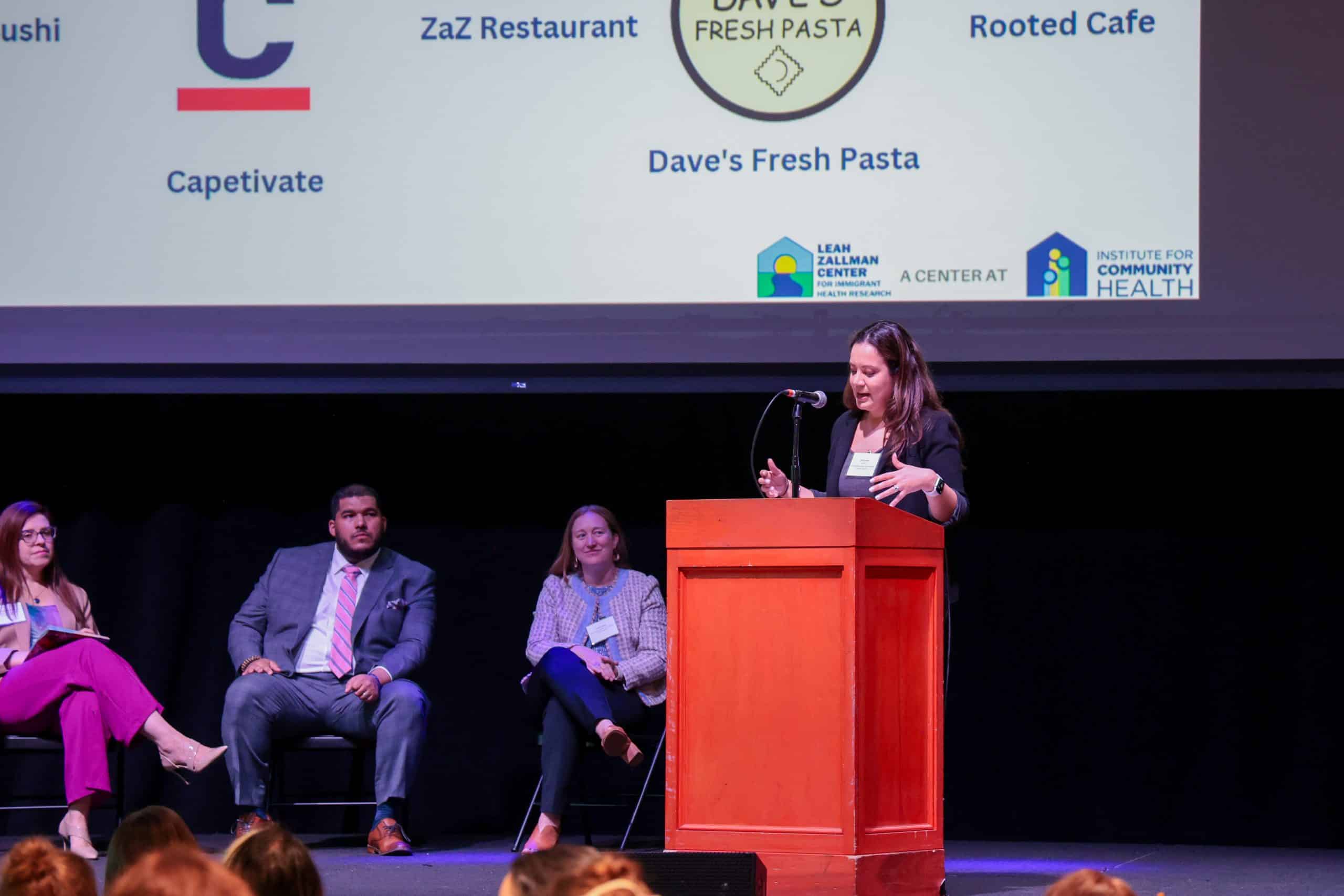
Sofía Ladner, LZC staff and community engagement manager, thanked our vendors, ICH staff, and attendees for making the event a success.
We hope to see you next year and look forward to continuing to partner on advancing immigrant well-being in Massachusetts. Stay connected and keep in touch at lzc@icommunityhealth.org.
NARRATIVE CHANGE ACTIVITY
 We had nine tables around the room with hosts who engaged with attendees about the following immigrant health topics:
 Attendees had 20-30 minutes for the narrative change activity. Many were able to visit at least two topic tables to share their ideas and learn from others. Each table had two large flip charts; attendees added their ideas on post-it notes to the flip charts. The table hosts then shared the flip charts with the LZC team for the synthesis we created below.
Download the Narrative Change Synthesis
RESOURCES
- [NARRATIVE CHANGE] Listening in Action Narrative Change Activity Synthesis | PDF
- [NARRATIVE CHANGE] Butterfly Lab Narrative Design Toolkit (Race Forward) | PDF
- [NARRATIVE CHANGE] Funding Narrative Change: An Assessment and Framework (Convergence Partnership) | PDF
- [NARRATIVE CHANGE] “They are assets, they are not liabilities”: Haitian-American pastor’s leadership shines amid migrant crisis (The Boston Globe, provided by Pastor Dieufort “Keke” Fleurrisaint, TAC)
- [MENTAL HEALTH] Weaving Well-being: A New Paradigm for Community Mental Health and Wellness (Leah Zallman Center, in partnership with MOIA) | PDF
- [MENTAL HEALTH] Measuring Well-being: A Sample of Mental Health and Well-being Scales for Immigrant Communities (Leah Zallman Center, in partnership with ADAPT at Tufts CTSI) | PDF
- [MENTAL HEALTH] “No child is left behind”: Mother, advocate provides resources for Somali American children with disabilities (The Boston Globe, provided by Asha Abdullahi, SPACE)
- [LEGAL STATUS] Who Gets to Be an American? Citizenship in the United States, 1781-Present (Grantmakers Concerned with Immigrants and Refugees) | PDF
- [LEGAL STATUS] Free immigration consultations (City of Boston, provided by the Mayor’s Office for Immigrant Advancement)
- [ACCESS TO CARE] Spotlight on Access to Care: Immigrant Access to Health Care in Massachusetts (Leah Zallman Center) | PDF
- [PUBLIC CHARGE] Public Charge Was Reversed–but not Enough Immigrant Families Know (Share Our Strength – No Kid Hungry) | PDF
- [PUBLIC CHARGE] Immigrant Essential Workers Likely Avoided Medicaid and SNAP Because of a Change to the Public Charge Rule (Health Affairs)
- [PUBLIC CHARGE] From Fear to Trust: Community-led Solutions to Increase Food Access in Immigrant Communities / Creando Confianza: Soluciones Comunitarias para Incrementar el Acceso a la Alimentación en Comunidades (Leah Zallman Center, in partnership with Share Our Strength – No Kid Hungry) | English PDF | Spanish PDF
- [ADDICTION AND RECOVERY] Immigrants and Substance Use Disorders: A Legal and Medical Perspective (Immigrant Legal Resource Center) | Part I PDF | Part II PDF
- [ADDICTION AND RECOVERY] Factors Impacting Treatment Access and Equity: Findings from the Boston Overdose Linkage to Treatment Study (Massachusetts Society for Addiction Medicine)
- [ASYLUM MEDICINE] Spotlight on Asylum: Health Equity and Care for Asylum Seekers in Massachusetts (Leah Zallman Center) | PDF
- [ECONOMIC EMPOWERMENT] Empowerment Economics (in partnership with National CAPACD and Hawaiian Community Assets)
- [ECONOMIC EMPOWERMENT] The Core Elements of Empowerment Economics (in partnership with National CAPACD and Hawaiian Community Assets) | PDF
- [ECONOMIC EMPOWERMENT] New American Cities (Leah Zallman Center, in partnership with Global Refuge) | PDF
- [GENERAL] Global Greater Boston: Immigrants in a Changing Region (Boston Indicators, provided by Kelly Harrington) | PDF
- [GENERAL] Resonance Framework (Justice Funders) | PDF
- [GENERAL] Driver’s License guide (new Work and Family Mobility Act guidance, available in multiple languages) (City of Boston, provided by the Mayor’s Office for Immigrant Advancement)
- [LZC] 2023 Power in Listening Recap (Leah Zallman Center)